
Solar Panel Installation in Cyprus: Process & Timeline
What happens when you install solar in Cyprus: survey, the DSO application, install day, meter change and grid connection — and how long each step takes.
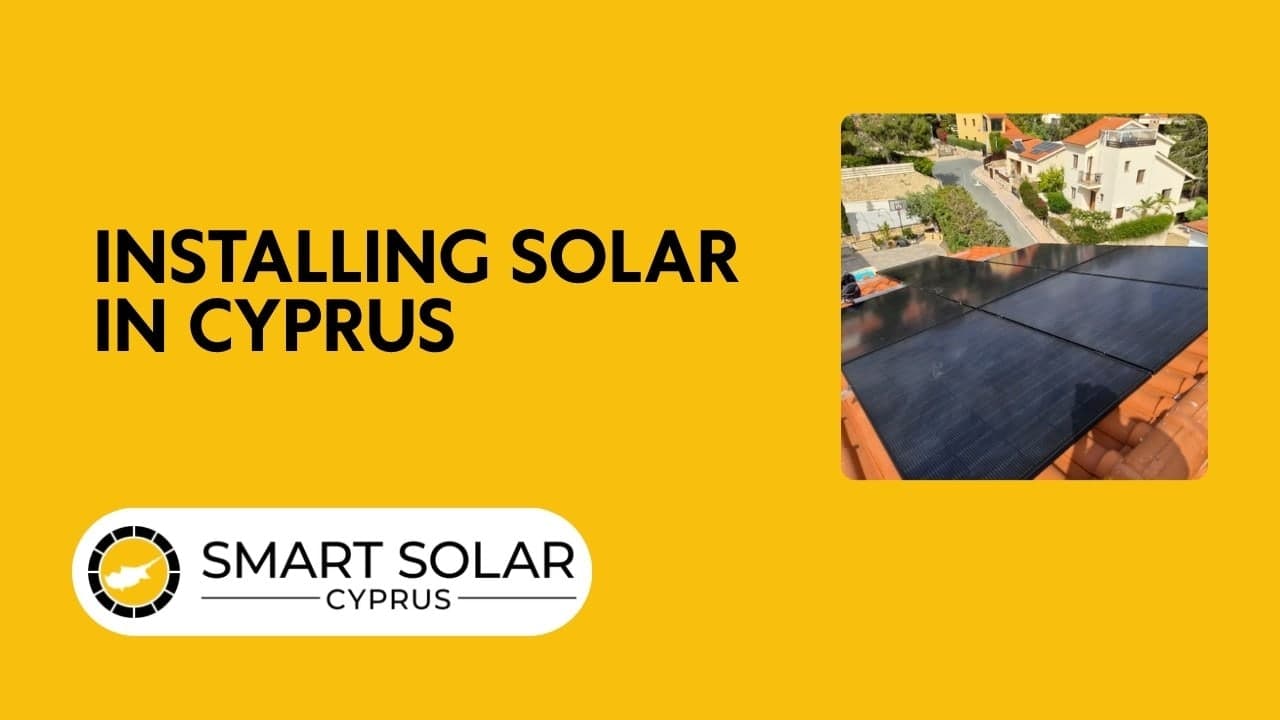
Most people who call us have already decided they want solar. What they have no picture of at all is what the next few weeks look like — who comes to the house, what they have to sign, who talks to the EAC, and when the system finally starts producing.
That gap causes more hesitation than price does. A quote for €7,000 is easy to understand. "Then we handle the paperwork" is not, and it is where the process feels like it could disappear for six months.
It does not. On a straightforward Cyprus home, the whole thing runs from first phone call to a working system in roughly four to eight weeks, and the noisy part — scaffolding, drilling, panels going up — takes one to two days. Here is each step, in order, with what you do and what we do.
The timeline at a glance
Indicative durations for a typical rooftop installation on a legally built Cyprus home:
- Site survey and design — 1 to 3 days from your call. A visit, roof measurements, a look at your consumption and your existing electrical panel.
- Quote and system design — 2 to 5 days. A written proposal with panel and inverter models, layout, expected output and price.
- Contract, deposit and documents — a few days, mostly waiting on your paperwork rather than ours.
- Application to the Distribution System Operator (DSO) at the EAC — the main waiting period. Typically a few weeks, occasionally longer at busy times of year.
- Installation — 1 to 2 days for most residential systems, 2 to 3 if a battery and a new consumer unit are involved.
- Inspection, meter change and grid connection — 1 to 4 weeks after installation, depending on the EAC's schedule in your area.
- Commissioning and handover — the same day as the meter change, or shortly after.
Four to eight weeks end to end is the realistic expectation. Anyone promising you two weeks is either not applying for a grid connection or has not been through the process recently.
Step 1: The site survey
Nothing meaningful can be quoted from a satellite photo. A proper survey checks five things.
- Roof orientation, pitch and shading. South is best, but east and west roofs work well in Cyprus and often suit self-consumption better because they spread output across the day. Chimneys, solar water heaters, water tanks and neighbouring buildings all get noted.
- Roof structure and covering. Tiled, flat concrete, or metal — each needs a different mounting system, and each carries a different labour cost.
- Your electricity consumption. We want your EAC bills, ideally a full year. The system is sized around what you actually use and when, not around what fits on the roof.
- Your existing electrical installation. The main consumer unit, the supply capacity, whether the property is single-phase or three-phase, and the cable route from roof to inverter to meter.
- Space for the inverter and any battery. Shaded, ventilated, accessible. In Cyprus that is usually not the west-facing wall in full afternoon sun, whatever the neighbour did.
If you want to arrive at that conversation with a number already in your head, our solar savings calculator gives you a first estimate from your bill, and our guide to what size solar system you need in Cyprus explains how sizing actually works.
Step 2: The design and the quote
A quote worth comparing lists specifics, not "a 6 kW system with premium panels". Look for the panel make, model and wattage, the inverter make and model, the number of panels and how they are laid out, the mounting system, the expected annual production in kWh, the warranty terms on each component, and what is and is not included in the price.
The layout matters more than people expect. Two roof faces at different orientations may need two MPPT inputs or optimisers. A single shaded panel can drag a whole string down. This is the stage where a good design earns its money, and our guide to choosing a solar inverter in Cyprus covers the decisions that get made here.
Since January 2026, every new system in Cyprus connects under Net Billing, not net metering. Exported electricity earns roughly the wholesale rate — around €0.08 to €0.10 per kWh — while imported electricity costs around €0.25 to €0.30. That changes the design brief entirely: the goal is now to use your own production rather than to send it to the grid. Expect the design conversation to cover shifting loads into daylight hours and whether battery storage belongs in the system. Our explainer on how net billing works in Cyprus sets out the numbers.
Step 3: Paperwork and the DSO application
This is the step people worry about and the step they do least work in. Your installer prepares and submits the application to the Distribution System Operator within the EAC, which is what authorises the system to connect to the network under Net Billing.
What you need to provide
- Proof of ownership — title deed, or a sale contract deposited at the Land Registry.
- The building permit and, where relevant, the planning permit for the property. The house has to be legally built and registered. This is the single most common cause of delay, and it is worth checking early rather than at signature.
- A site plan of the plot.
- A recent EAC bill, which carries the account and meter numbers the application is filed against.
- Your identity documents and, for a company or a jointly owned property, authorisation from the other owners.
For an ordinary rooftop installation on an existing legal dwelling there is no separate planning application to chase — standard roof-mounted systems on residential buildings are handled through the simplified route. Ground-mounted arrays, listed buildings and larger commercial installations are a different matter and need to be assessed individually.
A meter replacement charge is payable to the EAC, typically in the region of €250 plus VAT, because Net Billing requires a bi-directional meter that records import and export separately. Confirm whether your quote includes it or lists it as a pass-through cost — both are normal, but you should know which.
Step 4: Installation day
For a typical 5 to 8 kW residential system, the crew is on site for one to two days.
Day one is usually mounting: rails fixed to the roof structure, panels lifted and clamped, DC cabling run and routed into the building. Day two is the electrical work — inverter mounted and connected, DC and AC isolators fitted, earthing and surge protection installed, connection into the consumer unit, and any new circuits for a battery or backup board.
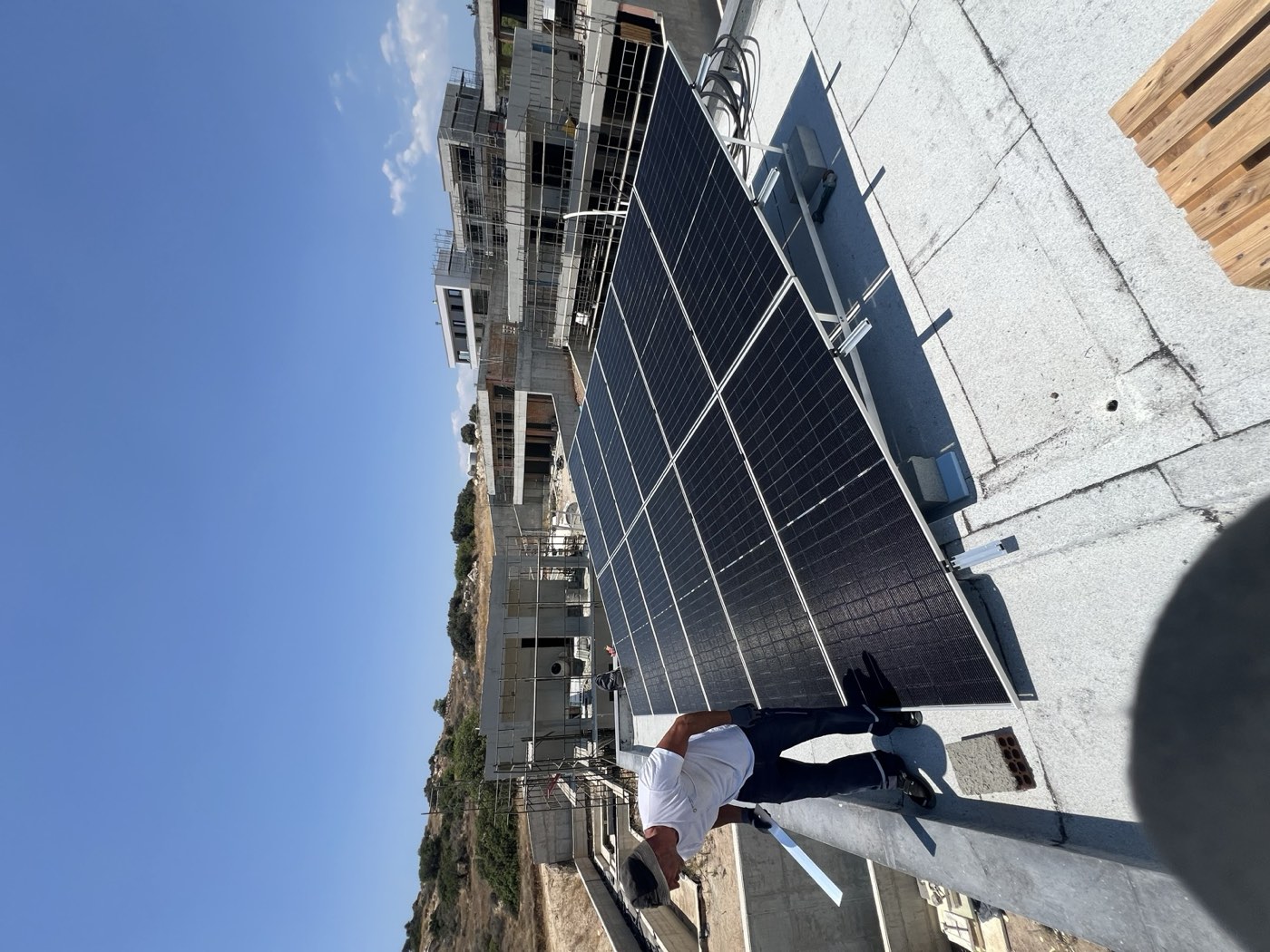
What you should expect from the crew: dust sheets where they work indoors, roof tiles lifted and replaced rather than drilled through, cable runs in conduit rather than draped over the tiles, and the site cleared at the end. What you should not expect: to be at home the whole time, though someone needs to give access and be there when the crew works inside.
If a battery is part of the scope, add a day. Batteries need wall or floor space, ventilation, their own protection, and commissioning against the inverter — it is not a plug-in accessory.
Step 5: Meter change and grid connection
Once the installation is complete and certified, the file goes back to the EAC. An inspection may follow, and then the existing meter is swapped for a bi-directional one that measures what you take from the grid and what you send back separately.
Until that meter is fitted, the system stays off. This is the part of the timeline nobody controls — it depends on the EAC's workload in your district, and it commonly runs one to four weeks after installation. It is frustrating to look at a finished array that is not allowed to run yet, but switching on without an approved connection is not an option worth entertaining.
Step 6: Commissioning, monitoring and handover
Commissioning is the day the system legally starts working, and it should not be a five-minute affair. A proper handover includes the inverter configured for Net Billing operation, string voltages and currents measured and recorded, monitoring set up on your phone with your own login, a walk-through of the isolators and what to do if something trips, and the documentation pack: certificates, warranties, the as-built layout, and the serial numbers of every panel and the inverter.
Ask for a production check in your first month. A system that is producing 15% below design and nobody noticed is a system that quietly loses you money for years. Our maintenance and monitoring service exists precisely because that is how most underperformance goes undetected.
What actually causes delays
In our experience, four things account for nearly every timeline that slips.
- Missing or non-matching building paperwork. An extension built without a permit, a title deed in a deceased relative's name, a plot that was subdivided informally. Sort this before you sign anything.
- A meter or account in someone else's name. A rented property, or a bill still in the previous owner's name, stops the application at the first hurdle.
- Seasonal load at the EAC. Application volumes surge at certain points in the year, and processing stretches accordingly.
- Scope changes mid-process. Deciding to add a battery after the application has gone in usually means revisiting it. Decide up front — our engineer's view on whether you need a battery in Cyprus is the place to settle that question.
None of these are exotic. All of them are cheaper to fix at week one than at week five.
Getting started
If you want the process run properly end to end — survey, design, application, installation and connection — a free site assessment is the first step, and it produces a written design and timeline before you commit to anything. Our full photovoltaic system page sets out what a complete installation includes, and if you are weighing the numbers first, our 2026 solar panel price guide for Cyprus covers what systems of each size actually cost.
Frequently Asked Questions
How long does it take to install solar panels in Cyprus?
Four to eight weeks from your first call to a working system, on a typical home with clean paperwork. The physical installation is only one to two days of that; the rest is design, the DSO application at the EAC, and waiting for the bi-directional meter to be fitted after the work is finished.
Do I need planning permission for solar panels in Cyprus?
For a standard roof-mounted system on an existing, legally built home, you do not go through a separate planning application — the connection is handled through the simplified route by your installer. What you do need is a property with a valid building permit and clear ownership documents. Ground-mounted arrays and commercial installations are assessed case by case.
What documents do I need to install solar panels in Cyprus?
Proof of ownership (title deed or a deposited sale contract), the building permit, a site plan of the plot, a recent EAC bill in your name, and your identity documents. For jointly owned property or a company, you also need authorisation from the other owners or the company's documents.
Who applies to the EAC for the grid connection?
Your installer does. The application goes to the Distribution System Operator within the EAC and covers the connection of your system under Net Billing. You supply the property and account documents; the technical file, drawings and certificates are prepared by the installer.
Can I use the system before the new meter is installed?
No. The system stays switched off until the EAC has fitted the bi-directional meter and approved the connection. Running a grid-connected system before that point is not permitted, and the meter change is the final gate in the process.
How disruptive is the installation itself?
Less than most people fear. One to two days on site for a typical residential system, with the noisy roof work concentrated in the first day. You need to provide access and be present while the crew works indoors on the consumer unit, but there is no need to move out or lose power for more than a short, planned interruption.
Want a quote tailored to your roof and your bill?
A free site visit and proposal, with no obligation and no pressure.
Keep reading
All articles
Heat Pump With Solar Panels in Cyprus: 2026 Guide
Running a heat pump on solar in Cyprus: running costs, how much PV it needs in winter, what installation costs and how Net Billing changes the sums.
Solar Water Heating in Cyprus: Thermal vs PV in 2026
Your solar water heater's electric element versus heating water with surplus photovoltaic power. What each costs in Cyprus and which wins in 2026.
Which Way Should Solar Panels Face in Cyprus?
The best direction and tilt angle for solar panels in Cyprus: why due south is not always the right answer under Net Billing, and what flat roofs need.