
How Much Do Solar Panels Cost in Cyprus? 2026 Guide
What solar panels cost in Cyprus in 2026: indicative prices by system size (3–10 kW), battery costs, and payback under Net Billing.
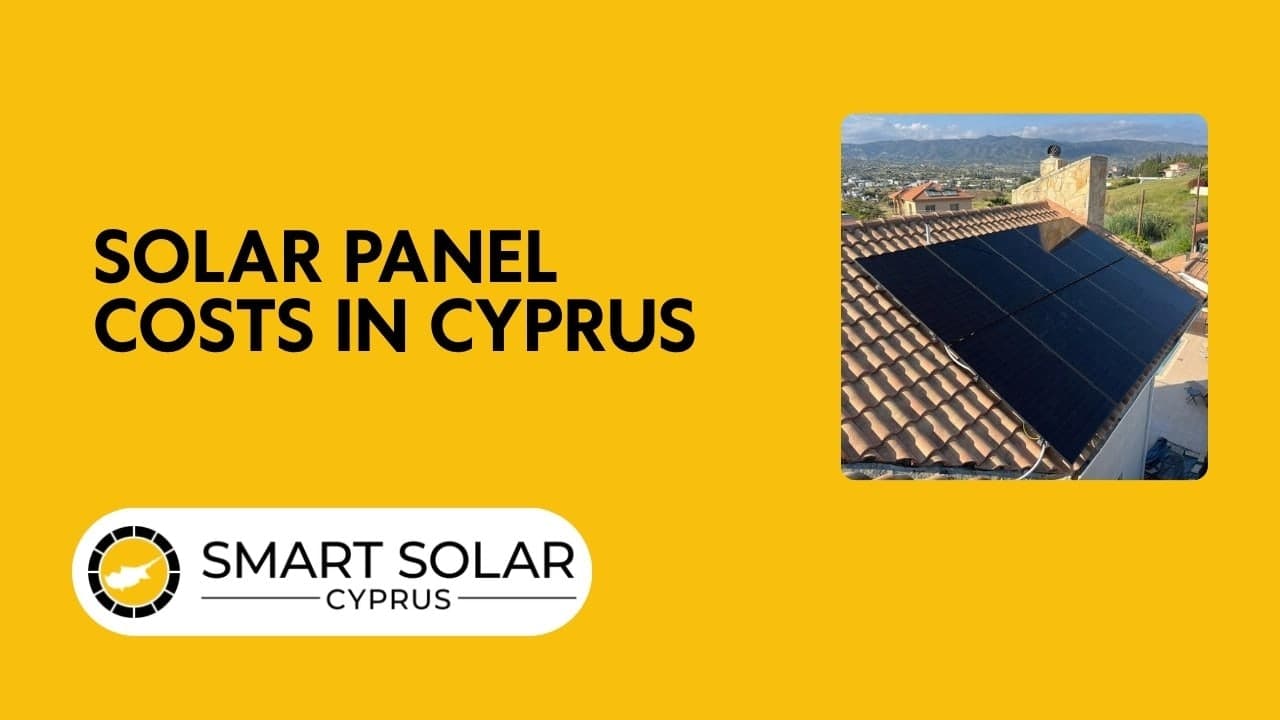
"How much will it cost?" is the first question almost every Cyprus homeowner asks about solar, and the honest answer is that it depends on the size of the system, the equipment you choose, and your roof. But that doesn't mean you should be left guessing.
The good news in 2026 is that panel prices have fallen sharply over the last few years, while electricity prices in Cyprus remain among the highest in Europe. That combination keeps the maths firmly in your favour. The one big change is that new systems now connect under Net Billing rather than net metering, which shifts where the savings come from.
This guide gives you real, indicative prices for a typical home installation, a breakdown of what you are actually paying for, the cost of adding a battery, and what makes one quote higher than another.
How much do solar panels cost in Cyprus in 2026?
For a typical residential rooftop system, expect to pay roughly €4,800 to €10,800+, depending on size. Most Cyprus homes land on a 3 kW to 7 kW system, which covers the bulk of a household's annual electricity use.
Those are turnkey prices: panels, inverter, mounting, installation, and grid connection paperwork included. The exact figure depends on your roof and the equipment you choose, so the numbers below are indicative. For a price tailored to your home, use our solar savings calculator or request a free quote.
Solar panel prices by system size
Indicative pricing for the most common home system sizes in Cyprus is shown below. Annual savings are calculated at €0.30/kWh, and most systems pay for themselves in around three years.
- 3 kW, €4,800–5,800: produces around 5,000 kWh a year and saves roughly €1,500 annually.
- 4 kW, €5,700–6,700: produces around 6,500 kWh a year and saves roughly €1,950 annually.
- 5 kW, €6,500–7,500: produces around 8,500 kWh a year and saves roughly €2,550 annually.
- 7 kW, €9,200–10,200: produces around 11,000 kWh a year and saves roughly €3,300 annually.
- 10 kW, €10,800+: produces around 16,000 kWh a year and saves roughly €4,800 annually.
After a small annual fee to the EAC (around €160–540 depending on size), these systems still deliver a strong net annual profit. Prices are indicative and depend on roof type, orientation, and the equipment chosen. A simple south-facing tiled roof is cheaper to install on than a multi-level flat roof that needs extra ballast or scaffolding.
What's included in the price
When you compare quotes, make sure you are comparing like for like. A complete Cyprus installation price normally covers:
- The solar panels: the modules themselves. A modern, high-efficiency panel such as the Luxor 450W bifacial produces more from the same roof area.
- The inverter: converts the panels' DC output into usable AC. A hybrid inverter (battery-ready) costs more than a basic string inverter but future-proofs your system.
- Mounting and racking: the frames that fix panels to your roof, sized for Cyprus wind loads.
- Installation, cabling and electrical work: labour, wiring, and the switchboard connection.
- EAC application and grid connection: registering the system and connecting it under the current Net Billing scheme.
- Monitoring: an app so you can see production and consumption in real time.
As a rough guide, on a typical 5 kW system the panels and inverter make up the largest share of the cost, with mounting, labour and paperwork accounting for the rest.
How much does a solar battery cost in Cyprus?
A battery is now the most common upgrade, and it is priced separately from the panels. Expect roughly €3,000 to €8,000+, depending on usable capacity (commonly 5 kWh to 15 kWh) and whether you want backup during power cuts.
Batteries matter far more under Net Billing than they did under net metering. Because exported energy is now paid at the lower wholesale rate while imported energy is charged at the full retail rate, every kilowatt-hour you store and use yourself is worth much more. Cyprus state support is also currently focused on battery-storage subsidies, which can offset part of the cost. We cover the detail in our guides on battery storage systems and whether you actually need a battery, and you can read about our battery storage service too.
What affects the price of your system
Two homes rarely pay exactly the same. The main factors are:
- System size (kW): more panels means a higher total price, but a lower cost per kW.
- Roof type and access: tiled, flat, or metal roofs each need different mounting; difficult access or scaffolding adds labour.
- Panel and inverter quality: premium brands and hybrid inverters cost more but last longer and perform better in Cyprus heat.
- Battery storage: the single biggest optional add-on.
- Single-phase vs three-phase supply: three-phase homes may need a different inverter setup.
- Electrical upgrades: an older switchboard or long cable runs can add to the total.
Payback and savings under Net Billing
Under the old net-metering scheme, the grid effectively stored your surplus at almost full value. Since 1 January 2026, all new systems connect under Net Billing: you are paid roughly the wholesale rate for energy you export (about €0.08–0.10/kWh) but pay the full retail rate (around €0.25–0.30/kWh) for what you import in the evening.
In practice this means the best return now comes from using your own solar energy directly — running the air conditioning, water heater, pool pump and appliances during daylight, and storing the rest in a battery. Thanks to Cyprus's very high sunshine levels and expensive grid electricity, a well-sized self-consumption system still typically pays for itself in around three years. Our explainer on net metering vs Net Billing walks through exactly how the new maths works.
Grants, subsidies and VAT
Cyprus has run various renewable-energy support schemes over the years, and current government support is focused mainly on subsidies for battery storage. Reduced VAT can also apply to some residential installations. Scheme budgets and eligibility change from year to year, so the amount you can claim depends on when you apply. We keep track of what is available and handle the application paperwork for you — see our incentives and support page for the latest position.
Getting an accurate price for your home
The figures above are a solid starting point, but the only way to know your real cost, and your real savings, is a quote based on your roof, your electricity bill, and how you use power through the day. We offer a free site survey and a clear, no-obligation proposal.
Start with our savings calculator for an instant estimate, or book a free quote and we will design a full photovoltaic system around your home.
Frequently Asked Questions
How much is a solar panel in Cyprus?
A single modern panel (400–600W) costs roughly €90–€150, but you don't buy panels on their own; you buy a complete, installed system. A turnkey residential system in Cyprus starts at around €4,800 for 3 kW and includes the inverter, mounting, installation and grid connection.
Is 5 kW enough to power a house in Cyprus?
For many Cyprus homes, yes. A 5 kW system produces around 8,500 kWh per year, which covers typical household use. If you run heavy air conditioning, electric water heating, a pool pump, or charge an EV, you may want 7 kW or more, plus a battery to use that energy in the evening.
Are solar panels worth it in Cyprus?
Yes. Cyprus has some of the highest solar irradiance in Europe and expensive grid electricity, so a correctly sized system typically pays back in around three years and then generates savings for decades. Panels usually carry 25–30 year performance warranties.
What makes one solar quote more expensive than another?
Mostly system size, panel and inverter quality, whether a battery is included, and your roof's complexity. A very cheap quote often uses lower-grade equipment or leaves out parts of the job, so always check exactly what is included.
Do solar panels still save money under Net Billing?
Yes, especially if you use your solar energy as you generate it and add a battery to store the surplus. With high Cyprus electricity prices, self-consumption remains very profitable even though exported energy is now paid at a lower rate than under net metering.
Want a quote tailored to your roof and your bill?
A free site visit and proposal, with no obligation and no pressure.
Keep reading
All articles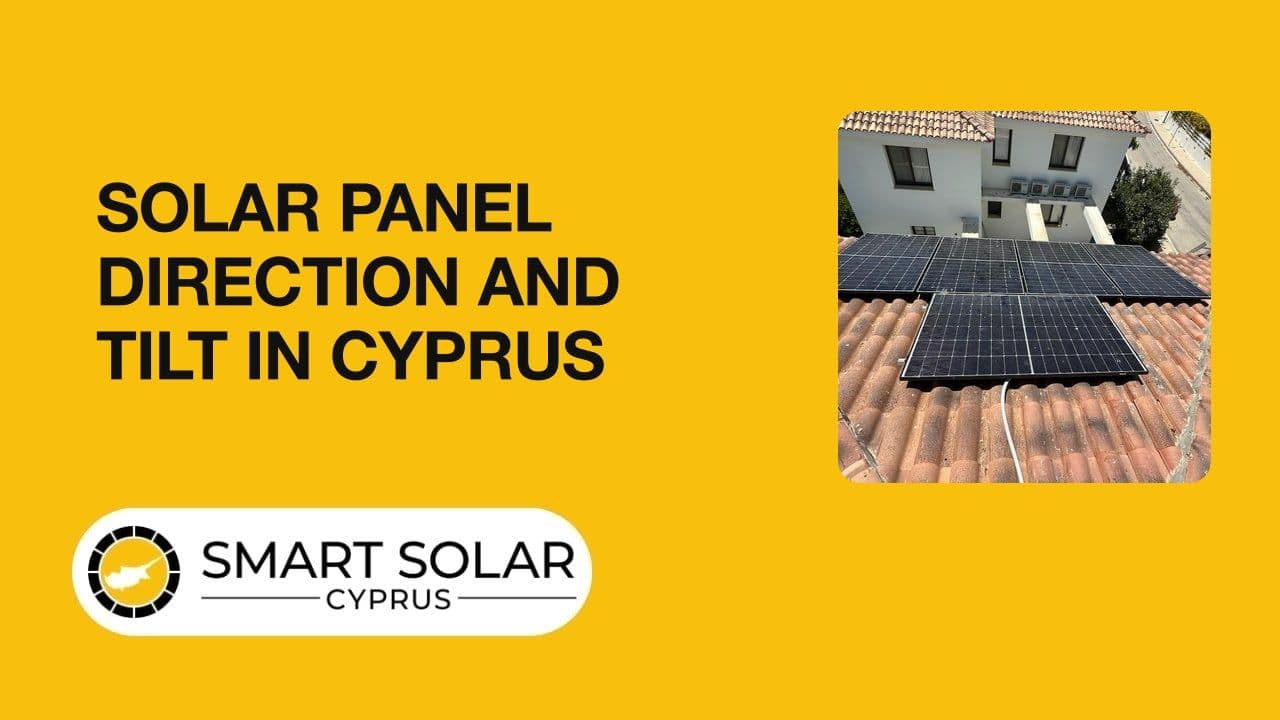
Which Way Should Solar Panels Face in Cyprus?
The best direction and tilt angle for solar panels in Cyprus: why due south is not always the right answer under Net Billing, and what flat roofs need.

Solar Air Conditioning in Cyprus: What Actually Works
How to run air conditioning on solar in Cyprus: how many panels one aircon needs, whether DC solar air conditioners are worth it, and what it costs.
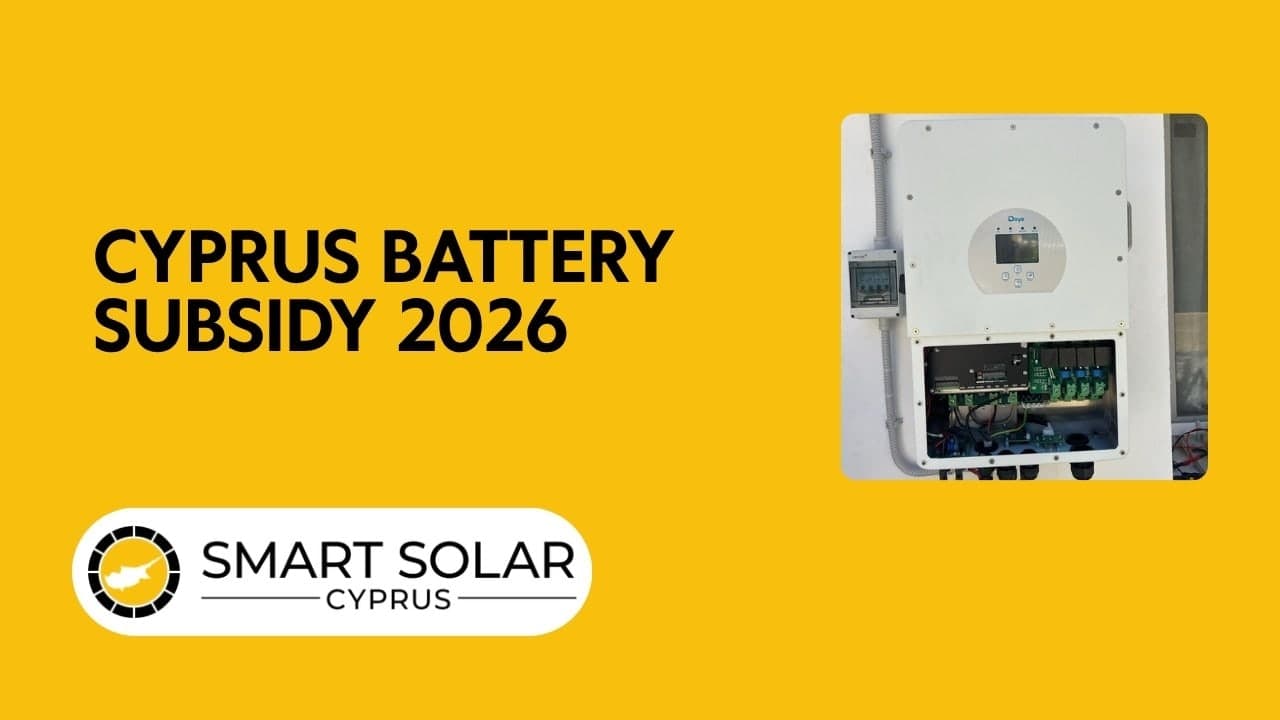
Solar Battery Subsidy in Cyprus: What's Coming in 2026
Cyprus has promised a home battery subsidy but nothing has opened. What has been said, what the September grant covers, and how to be ready on day one.