
Plug-in Solar Panels in Cyprus: Are Balcony Kits Allowed?
Can you plug a solar panel into a socket in Cyprus? What the rules say about balcony kits, the safety risks, what they produce and the legal alternatives.
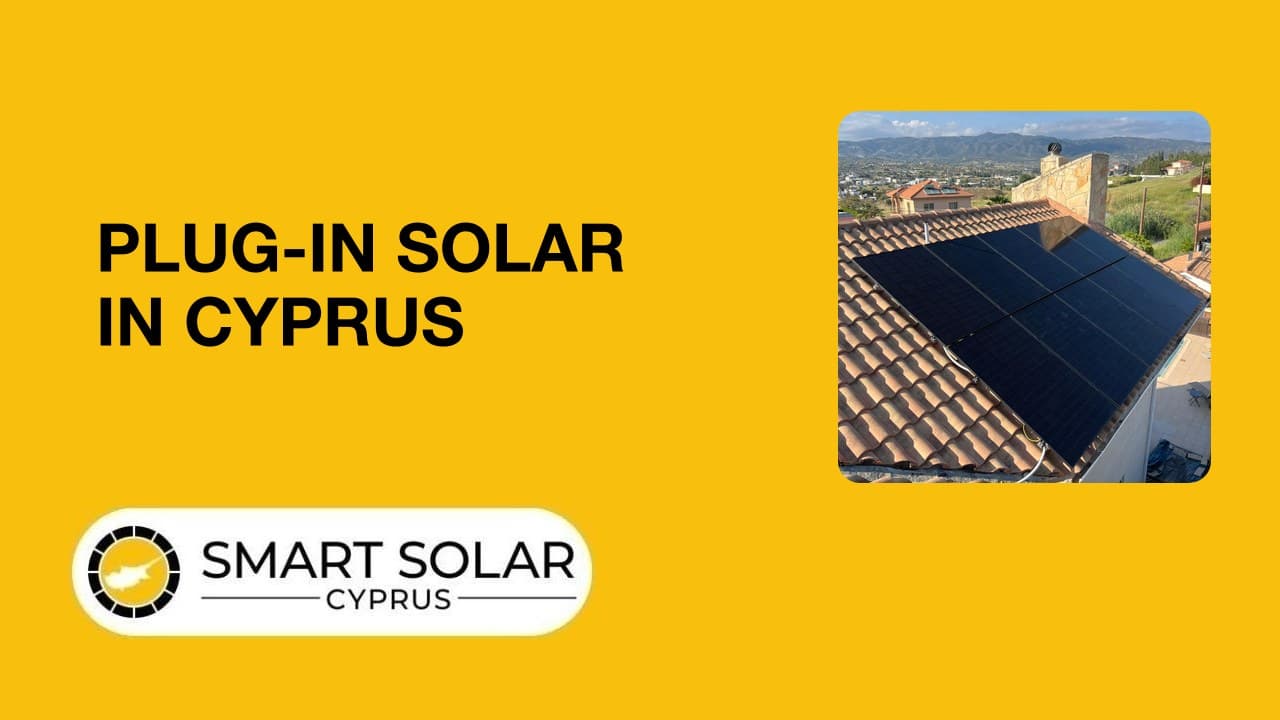
A few times a month someone sends us a link to a plug-in solar kit. Two panels, a small microinverter and a cable with an ordinary plug on the end. The listing says no installer, no paperwork: hang the panels on the balcony railing, plug them into a socket and watch the meter slow down. They want to know if it works in Cyprus and whether it is allowed.
The short answer is that the hardware works, but as of November 2026 Cyprus has no rule that lets you connect one to your home wiring without going through the normal EAC connection process. Germany allows these kits, and Greece approved them in September 2026, which is why the question keeps coming up. Cyprus has not followed yet.
This guide explains what a plug-in kit is, where the Cyprus rules stand, why the safety question is real, what one would actually save you, and what you can do instead if you live in a flat or rent.
What a plug-in solar kit is
A plug-in kit, often called balcony solar, is a very small grid-connected solar system. A typical kit has:
- One or two panels: usually 400 to 450 W each, mounted on a balcony rail, a wall or a flat roof.
- A microinverter: converts the panels' DC output to 230 V AC and synchronises it with the grid. Most kits sold in Europe cap the inverter output at 600 or 800 W.
- A plug-in cable: connects the inverter to a household socket, so the power flows backwards through that circuit into the house.
Whatever the house is using at that moment (the fridge, the router, a TV on standby) takes the solar power first. If the kit produces more than the house needs, the surplus flows out through your meter to the grid.
That last point is where the regulation comes in. A plug-in kit is not a standalone gadget. It runs in parallel with the grid, which makes it a generating installation in the eyes of the network operator.
Is plug-in solar legal in Cyprus?
In Cyprus, any photovoltaic system that connects to your home's electrical installation and runs in parallel with the grid goes through the EAC connection process. That means an application, a system designed to the distribution system operator's technical requirements, an inverter with approved grid protection, installation by a qualified electrician, and an inspection before the system is energised. Since 1 January 2026 new household systems connect under Net Billing.
We have found no simplified route for plug-in kits. There is no wattage threshold below which you can skip the application, and no "notify only" registration like the one Germany uses. Connecting a kit to a socket without approval leaves you with an unapproved generator on your supply, which can cause problems with your EAC supply contract and with your home insurance if anything goes wrong.
Two things are worth separating:
- Selling a kit is legal: shops and online sellers in Cyprus can sell panels and microinverters. A product being on sale does not mean it can be connected to the grid without approval.
- Off-grid use is fine: a panel charging a portable power station, a caravan battery or a garden light does not touch the grid, so the connection rules do not apply.
If the rules change, we will update this page. Until then, treat any listing that says "no permission needed" in Cyprus with caution.
What Germany and Greece allow
The kits arrive in Cyprus with marketing written for other markets, so it helps to know what those markets actually permit.
- Germany: plug-in systems are allowed with an inverter output of up to 800 W, raised from 600 W in 2024. Owners register the system in the national registry, and the process is deliberately light.
- Greece: in September 2026 the Ministry of Environment and Energy allowed plug-in balcony systems up to 800 W for self-consumption only. They may not export to the grid, the grid operator can block them in congested areas, and installers must sign off that the system meets safety requirements.
Note the Greek condition: no export. That requires either a zero-export inverter setting or a controller that measures the house load. A basic kit that simply pushes its output into a socket does not meet it.
The safety question
The arguments about plug-in solar are mostly about safety, and they are not just regulators being difficult.
- Live pins: a plug with power coming out of it is dangerous if it comes loose. Certified microinverters shut off within a fraction of a second when they lose the grid signal, but that relies on the inverter being genuine and working properly. Cheap uncertified units sold online are the concern.
- Overloaded circuits: a socket circuit is protected by a breaker sized for the cable. If the kit feeds 800 W into the far end of a circuit while you also draw a heavy load from it, the cable can carry more than the breaker sees. Older Cyprus homes with mixed wiring are the riskiest case.
- Anti-islanding: if the grid goes down, every generator on the network has to disconnect so linemen can work safely. Approved inverters are tested for this. Unknown ones may not be.
- Earth leakage and RCDs: some older installations have RCDs that react badly to inverters, causing nuisance trips or, worse, protection that does not trip when it should.
Germany allowed plug-in kits only after it wrote standards for the inverters and the connection. Cyprus has not yet done that work.
What a plug-in kit would actually produce
Suppose the rules did allow it. Is an 800 W kit worth having in Cyprus?
A well-placed panel in Cyprus produces around 1,700 kWh per kW per year. Balcony kits are rarely well placed. Hanging vertically on a railing, often shaded part of the day by the balcony above, they lose a large share of that. As a rough guide:
- 800 W, tilted on a flat roof, facing south: roughly 1,200 to 1,350 kWh a year.
- 800 W, vertical on a south-facing balcony: roughly 800 to 1,000 kWh a year.
- 800 W, east or west balcony with shading: often 600 kWh a year or less.
The value depends on how much of that you use as it is produced. A flat with a fridge, router and a few devices running in the day might use 150 to 250 W of base load. Anything above that is exported, and under Net Billing exported energy earns only around €0.09 to €0.11 per kWh, against roughly €0.29 to €0.32 for electricity you import. Without an export contract at all, the surplus is worth nothing to you.
In practice, a balcony kit in a Cyprus flat might save something like €150 to €300 a year. That is useful but small, and it assumes a legal, approved connection. For comparison, a rooftop system of a few kilowatts on a house typically saves well over €1,000 a year, as our guide to how much electricity solar panels produce in Cyprus shows.
Legal alternatives if you want small-scale solar
If you were drawn to a plug-in kit because you live in a flat, rent, or only want something small, these are the options that work today.
A small approved rooftop system
If you own a house, even a small system goes through the same EAC application as a large one, and the paperwork is the same. That is why we rarely recommend going below about 3 kW: the fixed costs of design, application and connection are spread over more output. The solar calculator gives a first estimate of size and savings, and our full photovoltaic system service covers the application end to end.
Virtual net billing for flats and shaded homes
If you have no usable roof but own land or another building, a system there can credit your home's EAC bill. The numbers are slower than a rooftop system, but it is fully legal. Our guide to virtual net billing in Cyprus explains how it works and who it suits.
A shared system on an apartment block
Some blocks install a system on the common roof to power the lifts, stairwell lights and pumps. It needs the agreement of the owners' committee, but it cuts the common charges for everyone and is often the best use of a flat roof that is otherwise empty.
A portable power station with folding panels
If what you want is backup during power cuts or power on the move, an off-grid kit does not need EAC approval because it never connects to your wiring. Our Smart Solar Power Kit combines a portable power station with panels for exactly that: camping, boats, and keeping the fridge and router running when the grid is down. It does not lower your bill the way a grid-connected system does, and we say so up front.
Frequently Asked Questions
Is plug-in solar legal in Cyprus?
Not as a plug-and-go product. As of November 2026 there is no simplified rule for plug-in kits in Cyprus, so any panel that feeds your home wiring needs to go through the EAC connection process like any other photovoltaic system. Off-grid use, such as charging a portable power station, is fine.
Do plug-in solar panels really work?
Technically, yes. A certified microinverter will feed power into your home and cover part of your base load. The output is small, typically 600 to 1,300 kWh a year for an 800 W kit depending on placement, so the savings are modest.
Can I use a plug-in solar panel at my house?
You can use one off-grid, for example to charge a battery or a power station. To connect one to your home's sockets or wiring in Cyprus, you would need an approved installation. For a house, a small rooftop system is usually the better route because the paperwork is the same.
Will Cyprus allow balcony solar in the future?
Possibly. Germany and Greece both allow kits up to 800 W, and Greece did so in September 2026. Any Cyprus framework would have to deal with the island's isolated grid and export limits, so a no-export rule like the Greek one is likely. We will update this guide if anything changes.
What should I do if I rent or live in a flat?
Ask your landlord or owners' committee about a shared rooftop system, look at virtual net billing if you own land elsewhere, or use a portable power station for backup. If you want to talk through your options, request a quote and we will tell you honestly which one fits.
Want a quote tailored to your roof and your bill?
A free site visit and proposal, with no obligation and no pressure.
Keep reading
All articles
EAC Smart Meters in Cyprus: What Solar Owners Should Know
How to read the EAC smart meter with solar panels: import 1.8.0, export 2.8.0, what changes under net metering and Net Billing, plus the EAC data portal.
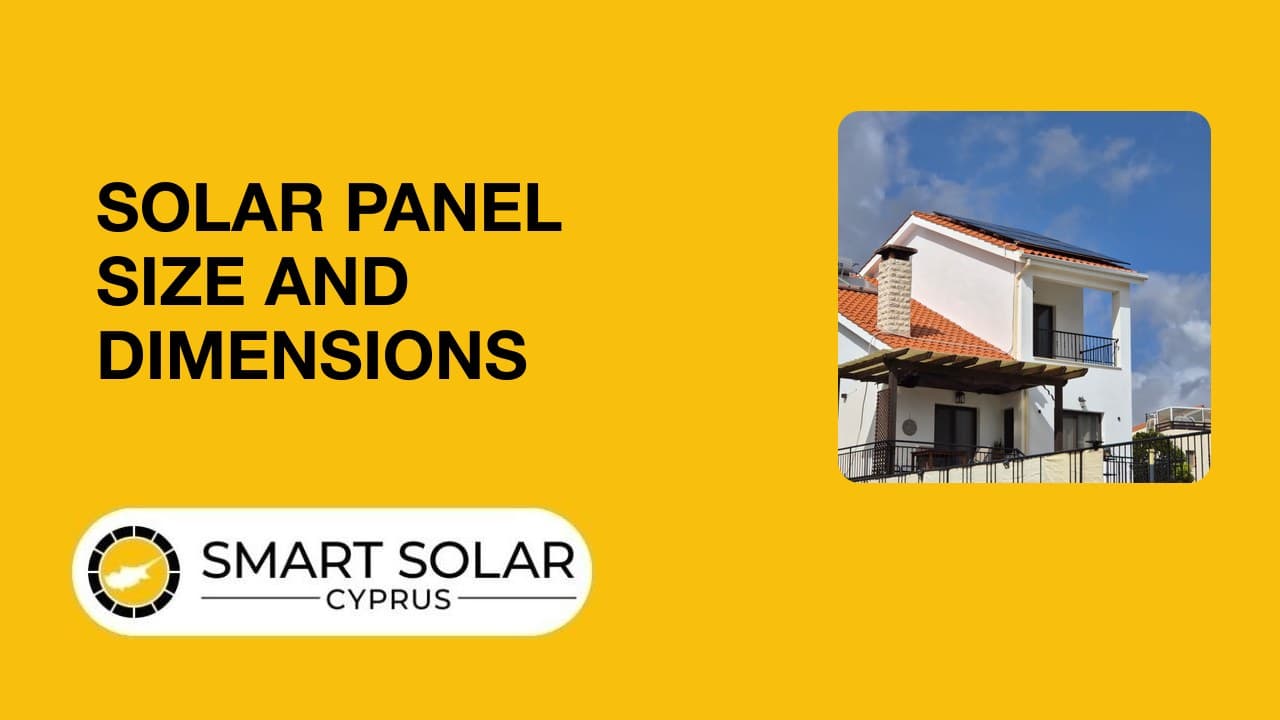
Solar Panel Size and Dimensions: A Cyprus Roof Guide
Solar panel dimensions and weights for 2026 modules, how many fit on a Cyprus roof, flat-roof row spacing, and how panel size affects your quote.
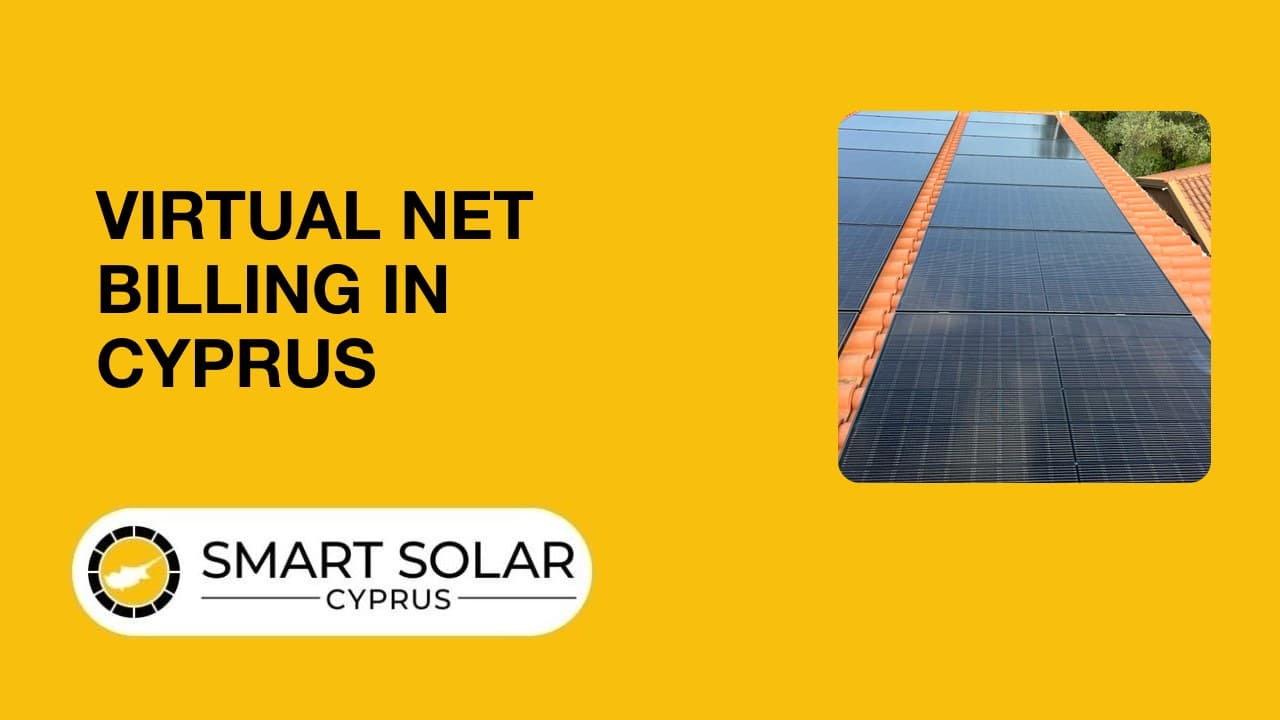
Virtual Net Billing in Cyprus: Solar Without a Roof
How virtual net billing in Cyprus works: panels on one site credit the EAC bill of another. Who it suits, the 400 kWp limit, real returns and the process.