
How Much Electricity Do Solar Panels Produce in Cyprus?
How much power solar panels really make in Cyprus: kWh per kWp, output by system size (3–10 kW), seasonal swings, and what cuts real-world yield.
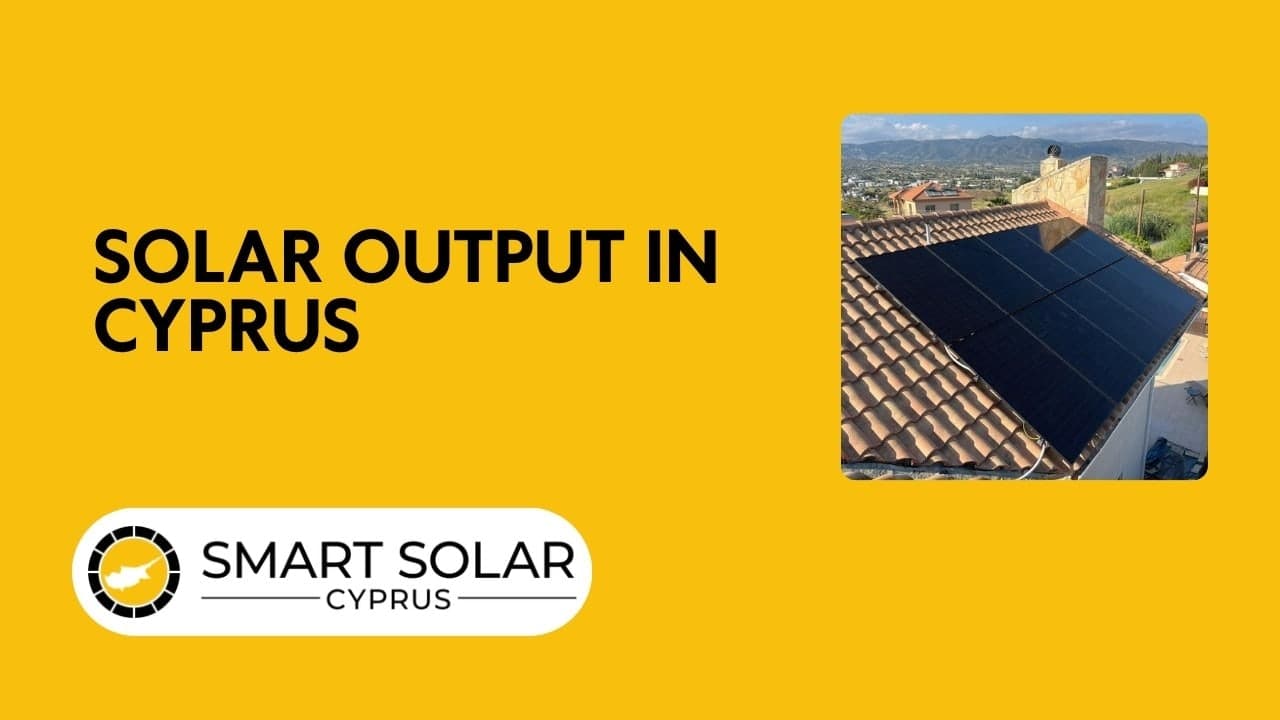
Before anyone signs off on a solar system, they want a straight answer to one question: how much electricity will it actually make? It sounds simple, yet the figures floating around online range wildly, and most of them come from countries with far less sun than Cyprus.
The honest answer is that output is predictable once you know two things: the size of your system in kilowatts (kWp) and the yield your location delivers per kilowatt. Cyprus sits near the top of Europe on that second number, which is why a modest rooftop here generates what a much larger array would need to produce in Germany or the UK.
This guide sets out the real production figures we see on Cyprus rooftops — per panel, per system size, and across the seasons — then explains what raises or lowers your actual yield, and how that translates into savings now that Net Billing governs every new connection.
The short answer: kWh per kWp
Solar output is measured against the system's rated capacity in kilowatts-peak (kWp). Every extra kilowatt of panels produces a predictable amount of energy each year, and in Cyprus that figure is high.
A well-designed system here produces roughly 1,600 to 1,800 kWh per kWp per year, with around 1,700 kWh a sensible working figure for a south-facing roof with a good tilt and little shading. That places Cyprus among the strongest solar yields in Europe — often 60 to 80 percent higher than a comparable system in northern Europe.
So the maths for a whole system is straightforward: multiply your system size by roughly 1,700. A 5 kW array produces about 8,500 kWh a year. Everything else in this guide is either a breakdown of that number or a reason it might land slightly higher or lower for your specific roof.
What a single panel produces
Most systems we install in Cyprus use panels rated around 450 W, such as the Luxor 450 W bifacial module. One of those panels, well sited, produces roughly 700 to 800 kWh per year — an average of about 2 kWh per day across the year.
That daily average hides a wide swing, though. On a clear June day a single 450 W panel can push out well over 3 kWh, while on an overcast December day it may only manage a fraction of that. The annual figure is what matters for sizing and payback; the daily figure is what you see moving on your monitoring app.
To cover a typical family home's consumption, you generally need somewhere between 8 and 14 of these panels working together — which brings us to system sizes.
Production by system size
Here is what the common residential system sizes produce in a typical Cyprus year, assuming a sound installation with good orientation. Treat these as realistic central estimates, not guarantees — your roof, tilt, and shading move the number.
- 3 kW — around 5,100 kWh/year: suits a smaller home or a modest daytime load, roughly 14 kWh on an average day.
- 4 kW — around 6,800 kWh/year: a common choice for a two-to-three-bedroom home with moderate use.
- 5 kW — around 8,500 kWh/year: the workhorse size for a Cyprus family home, comfortably covering most annual consumption.
- 6 kW — around 10,200 kWh/year: headroom for air conditioning, a pool pump, or future EV charging.
- 10 kW — around 16,000 to 17,000 kWh/year: for large homes, heavy loads, or households planning significant electrification.
These figures line up with what independent Cyprus data suggests — national PV potential is widely put at 1,500 to 1,700 kWh/kWp — and with the output our own installed systems report back. If you want a tailored number for your address and roof, the solar savings calculator does the arithmetic for you.
Why Cyprus produces so much
Three things put Cyprus ahead of most of the continent, and they compound.
- Sunshine hours: the island averages over 300 sunny days a year and one of the highest levels of solar irradiance in the EU. More usable light reaching the panels means more kWh out.
- Roof angles and orientation: Cyprus homes frequently have flat roofs or gentle pitches, which lets an installer mount panels at close to the optimal tilt (around 30 degrees) facing due south.
- A long, strong shoulder season: spring and autumn stay bright and productive here, so the year does not collapse into a few good summer months the way it does further north.
The one factor that works against Cyprus is heat, which we cover next — but even after heat losses, the yield remains excellent.
What changes your real-world output
The headline 1,700 kWh/kWp is an average for a good installation. Several factors push your actual figure up or down, and a competent installer designs around all of them.
Orientation and tilt
South-facing panels at roughly 30 degrees capture the most energy. East or west orientations still perform well — often within 10 to 15 percent of optimal — and can even suit your usage better by spreading production across the morning and evening. North-facing slopes are the only orientation we generally advise against.
Temperature
This is the counter-intuitive one: panels lose efficiency as they get hot. Output drops by roughly 0.3 to 0.4 percent for every degree above 25°C, so on a 40°C Cyprus afternoon a panel can run 10 to 15 percent below its nameplate rating. Good installations leave an air gap behind the panels for cooling, and this is exactly why the summer output curve does not rise as steeply as the sunshine alone would suggest.
Shading
Even partial shade from a chimney, a parapet, a water tank, or a neighbour's tree can pull down a whole string of panels. Careful layout — and, where needed, power optimisers or panel-level electronics — limits the damage.
Dust and cleaning
Cyprus dust and the occasional Saharan haze settle on panels and can shave several percent off output if left for months. A light rinse a few times a year usually restores it. Our solar panel maintenance guide covers the schedule in detail.
Age
Panels degrade slowly — typically around 0.4 to 0.5 percent a year — so a quality module still produces well over 85 percent of its original output after 25 years. Production tapers gently; it does not fall off a cliff.
Season by season
Annual figures are the right basis for sizing and payback, but your bill savings arrive month by month, and Cyprus production is far from flat.
In the peak summer months, a 5 kW system can generate over 1,000 kWh in a single month. In December and January, the same system might produce 400 to 500 kWh — roughly half. Even so, a Cyprus winter is generous by European standards: short days are offset by clear skies and mild temperatures that actually help panel efficiency.
The practical takeaway is that a system sized to cover your annual usage will overproduce in summer and underproduce in winter. What you do with that summer surplus — export it cheaply, or store and self-consume it — is the question that Net Billing has made central.
Turning production into savings under Net Billing
Since 1 January 2026, every new Cyprus system connects under Net Billing rather than net metering. That changes how each kWh you produce is valued.
Under Net Billing, energy you use in your home the moment it is produced offsets electricity you would otherwise buy at the retail rate of around €0.25 to €0.30 per kWh. Energy you export instead earns only the wholesale rate, roughly €0.08 to €0.10 per kWh. The gap is large, and it means raw production is no longer the whole story — when you use that production now matters as much as how much you generate.
This is the economic case for self-consumption and, increasingly, for battery storage: a battery lets you keep the cheap solar you make at midday and spend it in the evening instead of buying expensive grid power. For the full picture of how exports are valued today, see our guide to net billing in Cyprus. And if you are weighing production against upfront cost, the 2026 price guide sets the two side by side.
How to estimate your own output
You can get a solid estimate in three steps:
- Find your annual consumption in kWh from your EAC bills — add up a full year to smooth out the seasons.
- Divide by roughly 1,700 to see the system size in kW that would match your usage over a year.
- Adjust for your roof: trim the figure if you have shading, a poor orientation, or a shallow flat roof, and factor in whether your usage is mostly daytime or evening.
That gives a ballpark. For a precise, roof-specific figure — including how much you would realistically self-consume — a proper system design and quote is the reliable route. You can request a free assessment and we will model your actual production and savings before you commit to anything.
Frequently Asked Questions
How much electricity does a solar panel produce per day in Cyprus?
A single 450 W panel averages about 2 kWh per day across the year — over 3 kWh on a clear summer day and considerably less on an overcast winter one. A full 5 kW system averages around 23 kWh per day, again with a strong summer-to-winter swing.
How much does a 5 kW system produce in Cyprus?
Roughly 8,500 kWh per year for a well-sited system, or about 1,700 kWh for each kW installed. That is typically enough to cover most or all of a family home's annual electricity consumption.
Do solar panels still produce electricity in winter and on cloudy days?
Yes. Cyprus winters are bright by European standards, and panels keep working under cloud — producing perhaps 10 to 25 percent of their peak output on a heavily overcast day. Winter monthly production is roughly half the summer peak, not zero.
Does the Cyprus heat reduce solar output?
Slightly. Panels lose about 0.3 to 0.4 percent of efficiency per degree above 25°C, so a very hot afternoon trims midday output by 10 to 15 percent. Proper mounting with airflow behind the panels limits this, and Cyprus still delivers among the highest yields in Europe.
Is a 10 kW system enough to run a Cyprus home?
For almost every household, comfortably. A 10 kW system produces around 16,000 to 17,000 kWh a year — well beyond typical home consumption — which is why systems this size are usually chosen by large homes, or by households planning EV charging and wider electrification.
Want a quote tailored to your roof and your bill?
A free site visit and proposal, with no obligation and no pressure.
Keep reading
All articles
How to Read Your EAC Bill With Solar Panels in Cyprus
Your EAC bill with solar panels, line by line: import and export readings, net metering credits, Net Billing euro credits, and why the bill can still rise.
Heat Pump With Solar Panels in Cyprus: 2026 Guide
Running a heat pump on solar in Cyprus: running costs, how much PV it needs in winter, what installation costs and how Net Billing changes the sums.
Solar Water Heating in Cyprus: Thermal vs PV in 2026
Your solar water heater's electric element versus heating water with surplus photovoltaic power. What each costs in Cyprus and which wins in 2026.