
Solar Panels vs Photovoltaics: What's the Difference?
Solar thermal vs photovoltaic: what each technology does, where each makes sense in Cyprus, and which one cuts your EAC bill the most.
Updated July 2026 to reflect Net Billing and current prices.
In everyday conversation the two terms get used interchangeably, and most of the time that is harmless. It starts to matter when you compare quotes: a solar water heater and a photovoltaic system solve different problems at very different prices, and with more than 3,300 hours of Cyprus sunshine a year it pays to know which one you are actually buying.
Cyprus is the rare place where this confusion is understandable, because most roofs here already carry solar equipment. This guide explains what each technology does, what each costs and saves at 2026 prices, and how the two work together on the same roof.
Photovoltaics: the electricity generators
Photovoltaic (PV) panels convert sunlight directly into electricity. When photons strike the silicon cells, they knock electrons loose and create a direct current, which an inverter converts into the alternating current your home runs on. The word itself is just "photo" (light) plus "voltaic" (electricity).
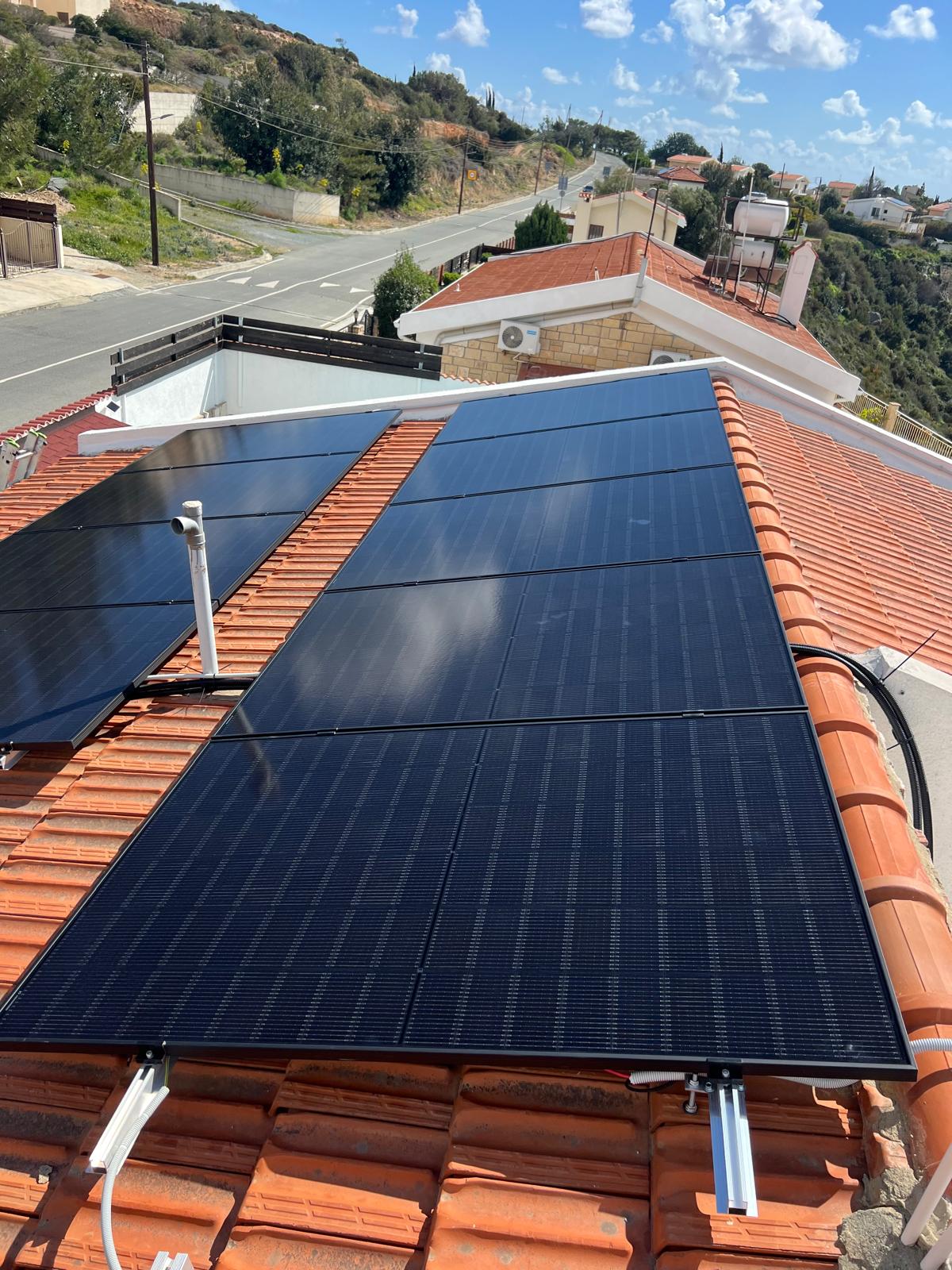
These are the blue or black rectangular panels you see on a growing number of Cyprus rooftops. A modern residential panel produces 400-600 watts and converts around 20-22% of the light hitting it into usable power. A typical home system of 3-7 kW covers most of a household's annual consumption; we cover output in detail in how much electricity solar panels produce in Cyprus.
The key point: PV electricity is universal. It runs your air conditioning, appliances, lights, pool pump and EV charger, and under the 2026 Net Billing rules any surplus you export earns a credit.
Solar thermal: the water heaters on almost every Cyprus roof
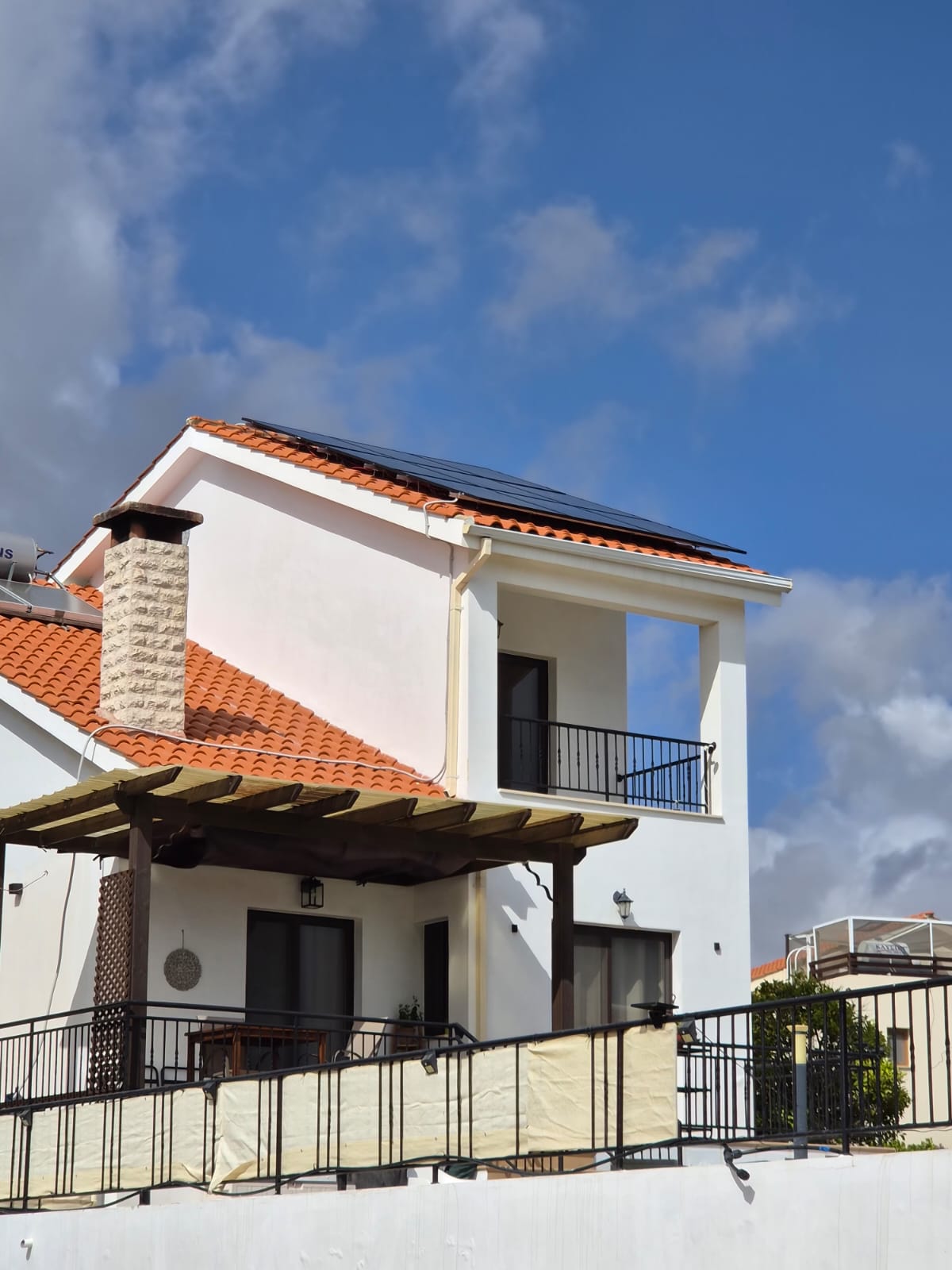
Solar thermal collectors work on an entirely different principle. Instead of generating electricity, they capture the sun's heat directly. Dark collectors warm a fluid, which circulates to an insulated tank and heats your water supply. The familiar Cyprus thermosiphon, a pair of collectors with a horizontal tank above them, does this with no pumps or electronics at all.
Cyprus adopted this technology decades ago and remains one of the world leaders in solar water heating per household, which is exactly why "solar panels" means two things here. Thermal collectors are efficient at their single job, converting 70-80% of sunlight into heat, but that heat can only ever be hot water. They cannot run your air conditioning, your fridge or anything with a plug.
Why the difference matters when you compare quotes
The two systems occupy different price classes and answer different bills.
Heating a 150-200 litre tank electrically takes roughly 6-9 kWh, which at 2026 grid prices of €0.29-0.32 per kWh means €2-3 every time. A solar water heater removes most of that cost for most of the year. Worthwhile, but bounded: water heating is only one line of your energy use.
A photovoltaic system addresses the whole bill. Turnkey home systems in Cyprus run from about €4,800 for 3 kW to €10,200 for 7 kW, produce 5,000-11,000 kWh a year, and save €1,500-3,300 annually at current prices. The full breakdown is in our 2026 price guide. Payback for a self-consumption-focused system is around three years.
So when a contractor quotes "solar panels", ask which technology they mean. The numbers only make sense once you know what is being priced.
The 2026 twist: PV panels now heat water too
Under the old net-metering scheme, exporting surplus and buying it back later cost you nothing, so there was little reason to think about where your midday production went. Net Billing changed that. Since January 2026, exported energy earns roughly the wholesale rate of €0.08-0.10 per kWh, while evening imports cost around €0.30, as we explain in our net metering vs Net Billing guide.
That gap makes your electric water heater a storage device. A simple timer, or a smart diverter that senses surplus, points midday PV production at your tank: energy that would have earned €0.09 as an export instead saves you €0.30 as avoided evening imports. A tank of hot water is the cheapest battery you already own.
This is why modern Cyprus system design treats water heating as part of the PV plan, whether or not a thermosiphon is on the roof. On heavily overcast winter days, the immersion element backs up the thermosiphon; the rest of the year, the sun handles both jobs from both directions.
Efficiency numbers, read correctly
On paper, solar thermal looks more efficient: 70-80% of captured sunlight becomes heat, against 20-22% becoming electricity for PV. Both numbers are true and the comparison still misleads, because heat and electricity are not interchangeable. Thermal efficiency only ever produces hot water; PV efficiency produces the most flexible form of energy there is.
Where the comparison does matter is roof space. A thermosiphon occupies 3-4 m² of the sunniest part of many Cyprus roofs. A PV system wants 18-25 m² of unshaded area, and on smaller roofs the two compete. When we survey a roof, placement of existing water heaters, tanks and chimneys is one of the first things we map, because even partial shade on a PV array costs real output.
How to choose in practice
For most Cyprus homes the answer is not either-or:
- You have a working thermosiphon. Keep it, and add PV sized to your electricity consumption. This is the most common and most cost-effective configuration on the island.
- Your water heater is due for replacement. Compare a new thermosiphon against slightly more PV plus a diverter. On shaded or crowded roofs, the PV-plus-diverter route often wins because it frees the best roof area for generation.
- You are building new. New homes must reach energy class A with at least a quarter of primary energy from renewables, and a properly planned PV system is the practical way to comply. Hot water then becomes a design detail: thermosiphon, heat pump or PV diverter.
- You use a lot of hot water. Guesthouses and large families with heavy hot-water demand still get real value from dedicated thermal capacity alongside PV.
If the goal is cutting your EAC bill, photovoltaics do the heavy lifting. A full photovoltaic system with the right self-consumption setup, and battery storage where the evening usage justifies it, addresses the whole bill rather than one appliance.
Frequently Asked Questions
Are solar panels and photovoltaics the same thing?
In everyday Cyprus usage, "solar panels" can mean two different technologies. Photovoltaic (PV) panels convert sunlight into electricity that powers your whole home. Solar thermal collectors, like the thermosiphon water heaters on most Cyprus roofs, only heat water. When installers quote for solar panels in 2026, they almost always mean a photovoltaic system.
Can photovoltaic panels heat my water?
Yes. A PV system produces electricity, and electricity can run your water heater. Under Net Billing this is often the smartest use of midday surplus: a diverter or a simple timer heats your tank with energy that would otherwise be exported at roughly €0.08-0.10 per kWh, saving you the €0.30 you would pay the grid in the evening.
Should I replace my solar water heater with photovoltaics?
Usually you keep both. A working thermosiphon already heats your water efficiently and costs nothing to run, so the sensible upgrade path for most Cyprus homes is to leave it in place and add a PV system for everything else: air conditioning, appliances, lighting and an EV. If the thermosiphon is at the end of its life, it is worth comparing a replacement against extra PV capacity plus a diverter.
Which saves more money in Cyprus, solar thermal or photovoltaic?
Photovoltaics, by a wide margin, because they address your entire electricity bill rather than only water heating. With household electricity at €0.29-0.32 per kWh, a 5 kW PV system producing around 8,500 kWh a year saves in the region of €2,550 annually, while a solar water heater saves only the few hundred euros a year that heating water electrically would cost.
Next step: request a free quote and we will look at what is already on your roof, what you spend, and design around both. The solar calculator gives you a first estimate in a minute.
Want a quote tailored to your roof and your bill?
A free site visit and proposal, with no obligation and no pressure.
Keep reading
All articles
How to Read Your EAC Bill With Solar Panels in Cyprus
Your EAC bill with solar panels, line by line: import and export readings, net metering credits, Net Billing euro credits, and why the bill can still rise.

Heat Pump With Solar Panels in Cyprus: 2026 Guide
Running a heat pump on solar in Cyprus: running costs, how much PV it needs in winter, what installation costs and how Net Billing changes the sums.
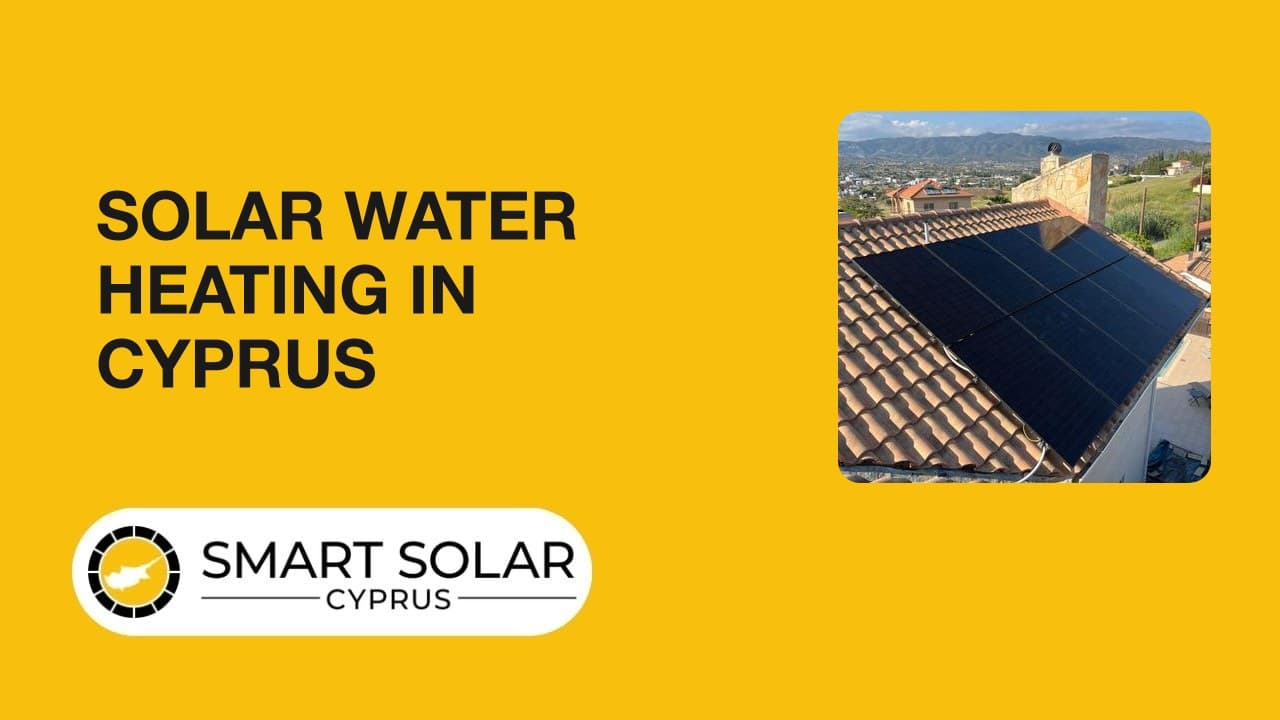
Solar Water Heating in Cyprus: Thermal vs PV in 2026
Your solar water heater's electric element versus heating water with surplus photovoltaic power. What each costs in Cyprus and which wins in 2026.