
Do Solar Panels Work in a Power Cut? Cyprus Guide
Why grid-tied solar shuts down in a Cyprus power cut, what a hybrid inverter and battery actually keep running, and what genuine backup costs.

It is 40 degrees outside, the air conditioning has been running since lunchtime, and the power goes off across the neighbourhood. You look up at a roof covered in panels, in full August sun, and nothing in the house is working.
This is the single most common surprise we hear about from homeowners in Cyprus, and it almost always arrives during a summer outage. The panels are fine. The inverter is fine. The system is doing exactly what it was designed and certified to do — which is to shut itself down the moment the grid disappears.
Whether that is acceptable is a decision you make at the design stage, not during the outage. Here is what actually happens, what it takes to keep the lights on, and what that costs in Cyprus.
The short answer
A standard grid-tied solar system does not power your home during a power cut. It disconnects within a fraction of a second of losing the grid and stays off until supply returns, regardless of how much sun is falling on the roof.
A system with a hybrid inverter and a battery can keep part of your home running — but only if the backup capability was specified, wired and commissioned. A battery on its own does not do it. Plenty of homes in Cyprus have storage installed purely for self-consumption savings and go dark in an outage along with everyone else.
The distinction between those two systems is a few hundred euro of wiring and one line on a quote. Most people never think to ask about it.
Why the inverter switches itself off
The behaviour is called anti-islanding protection, and it is a mandatory function on every grid-connected inverter sold in Europe.
When the distribution network goes down, engineers may be working on lines they have isolated and expect to be dead. If thousands of rooftop systems carried on pushing power into those lines, the network would be energised in unpredictable pockets — "islands" — and the people repairing it would have no way of knowing which cables were live. Inverters therefore monitor grid voltage and frequency continuously, and disconnect the moment either drifts outside limits.
It is a safety rule, not a manufacturer's shortcoming, and no reputable installer will disable it. The way around it is not to defeat the protection but to build a section of your home that can be electrically separated from the grid and run independently. That is what a backup system does.
What genuine backup actually requires
Four things have to be in place. Miss any one and you have a system that saves you money on bills but does nothing at all in an outage.
- A hybrid inverter with a backup output. Also sold as EPS (Emergency Power Supply) or UPS output, depending on the brand. This is a separate terminal on the inverter that only becomes live when the grid drops. Not every hybrid has one, and on some models it is an optional extra. Our guide to choosing a solar inverter in Cyprus covers what else to look for in the unit itself.
- A battery. Without stored energy there is nothing to draw on at night, at dawn, or when a cloud passes. Solar alone cannot hold a stable supply for a house — output moves far too quickly.
- An essential-loads sub-board. A separate consumer unit fed from the backup output, with the circuits you actually care about moved onto it. This is the part that gets left out of quotes most often.
- Correct commissioning. Backup mode has to be enabled, tested and demonstrated. Ask your installer to trip the main breaker in front of you and watch what stays on.
Why you cannot simply back up the whole house
In principle you can. In practice, on most Cyprus homes, you should not.
The backup output on a residential hybrid inverter is typically rated somewhere between 3 kW and 6 kW of continuous output. A whole Cyprus house in August — several air conditioning units, an electric water heater, an oven, a pool pump — will exceed that within seconds and trip the backup. Worse, if every circuit is on backup, a modest battery drains in under an hour keeping standby loads and an idle water heater alive.
Choosing circuits deliberately is what makes backup useful. A typical essential-loads board in Cyprus carries lighting, sockets in the kitchen and living areas, the fridge and freezer, internet and alarm, and one inverter air conditioning unit for a single room. That set will run comfortably on a few hundred watts most of the time.
What a backup system will realistically run
Indicative figures for a 10 kWh battery with roughly 8 to 9 kWh of usable capacity, assuming it is reasonably charged when the outage starts:
- Fridge, freezer, lighting, WiFi and phone charging — 150 to 300 W: comfortably a full day and night, and longer if the sun comes up and recharges the battery.
- The above plus one inverter air conditioning unit — around 800 W to 1.2 kW: roughly 7 to 10 hours overnight, or effectively indefinitely in daylight while the array is producing.
- Adding an electric oven or water heater — 2 to 3 kW each: measured in a couple of hours at best. These belong on the non-essential board.
- A pool pump on backup — 0.75 to 1.5 kW: technically possible, rarely sensible. It can wait.
The daylight point matters more in Cyprus than almost anywhere. During an outage on a clear day, a properly configured hybrid keeps running the essential board from the panels and tops the battery up at the same time. A Cyprus roof typically delivers around 1,500 to 1,700 kWh per kWp per year, and summer is the strongest part of that — so a daytime cut is the easy case. The night after is what the battery is really for. Our guide to how much electricity solar panels produce in Cyprus sets out the seasonal numbers.
What backup costs in Cyprus
Backup is not a product you buy separately. It is a set of choices inside a normal solar and storage installation, and the incremental cost depends on where you are starting from.
- Specifying a hybrid inverter with a backup output instead of a plain string inverter — roughly €500 to €1,000 extra. Worth doing even if you never buy a battery, because it keeps the door open.
- Battery storage, typically €8,000 to €10,000 installed for a 10 kWh system. This is the substantial part of the bill, and it is the same battery that drives your self-consumption savings day to day. See our battery storage page for sizing and payback.
- The essential-loads sub-board and rewiring — usually a few hundred euro on a straightforward installation, more if your existing consumer unit is old, full, or awkwardly located.
- Full off-grid capability — considerably more again. Larger battery bank, oversized array and a different design philosophy altogether. Our off-grid and hybrid systems page explains where that line sits.
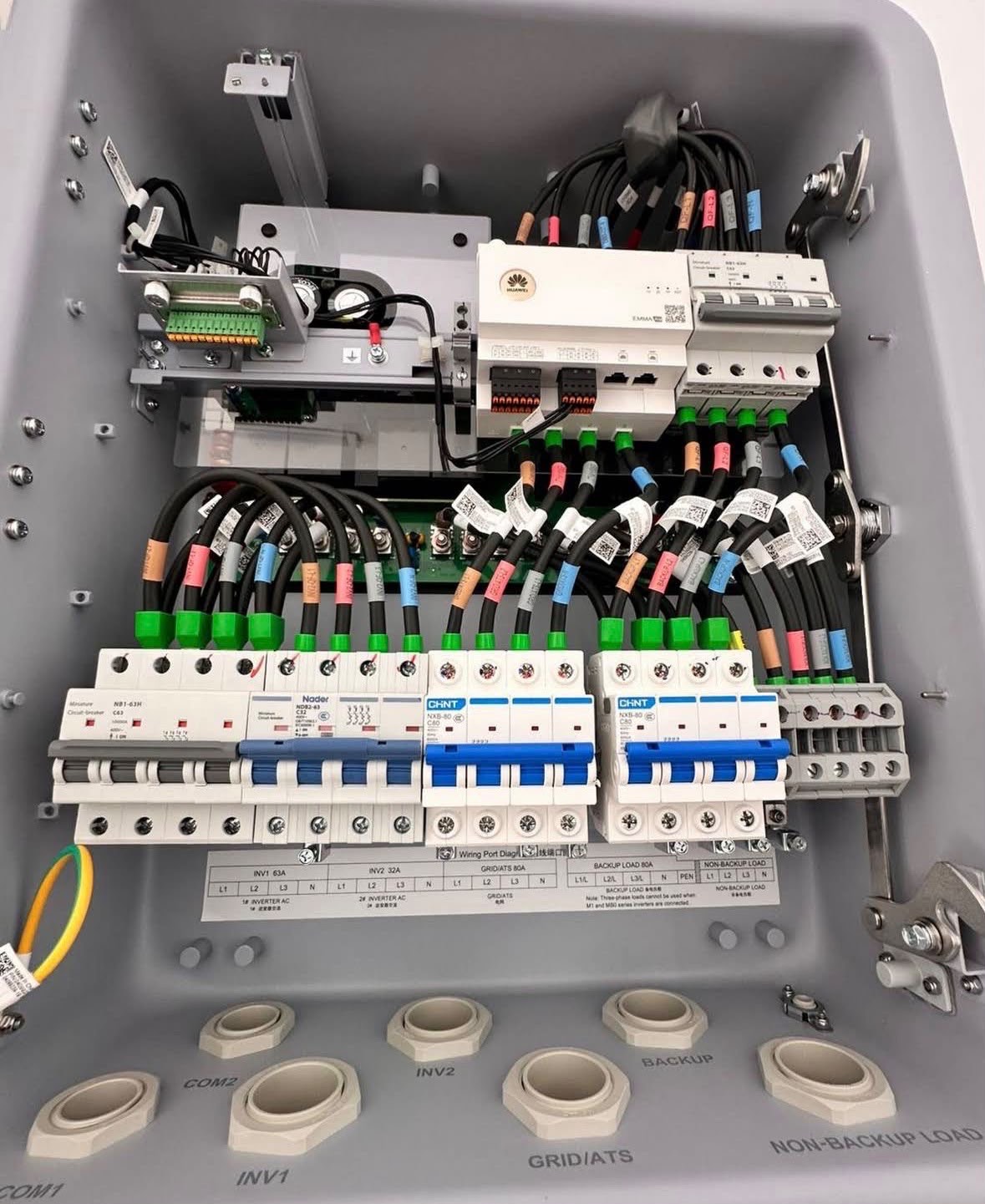
The honest framing is this: nobody in Cyprus buys a battery purely for blackout insurance, because the outages are not frequent enough to justify the spend on their own. What has changed is that under Net Billing the battery already pays for itself through self-consumption — exported electricity earns roughly €0.08 to €0.10 per kWh while imported electricity costs around €0.25 to €0.30. Backup then comes almost free on top of an investment you were already making for financial reasons. Our engineer's view on whether you need a battery in Cyprus is the place to start if you have not decided yet.
Solar backup versus a generator
Plenty of Cyprus homes already have a petrol generator in the garage. The two solutions solve the problem differently.
A generator is cheaper to buy, has effectively unlimited runtime while you can get fuel, and handles heavy loads a residential inverter cannot. Against that, it needs someone at home to start it, it will not run indoors, it is noisy, it requires fuel that goes stale in storage, and it does nothing for your electricity bill for the 8,700 hours a year the grid is working normally.
Battery backup starts automatically, silently, usually within 10 to 30 milliseconds — fast enough that computers and routers do not notice. It has no fuel to manage and no maintenance beyond the system it is already part of. Its limits are the inverter's output rating and the energy left in the battery.
For most homeowners the practical answer is that battery backup covers the outage you actually get in Cyprus — a few hours, occasionally longer after a storm — while a generator is the right tool for a rural property with a long history of extended cuts or loads that a hybrid inverter cannot carry.
Curtailment is not a power cut
Worth separating, because the two get confused constantly in local discussion.
A power cut is the grid going down. Curtailment is the network operator limiting or blocking your export while the grid is perfectly healthy, at times when the system has more solar than it can absorb. During curtailment your house still has power and your panels may still supply your own consumption, depending on how the limit is applied — you simply stop being paid for the surplus.
The remedy is different too. Backup wiring does nothing for curtailment; a battery does, because energy that cannot be exported can be stored and used after sunset instead. We covered this in detail in our post on curtailment and battery storage in Cyprus.
What to ask before you sign
Four questions will tell you whether a quote includes real backup:
- Does the inverter have a backup or EPS output, and what is it rated at in kW?
- Which specific circuits will be moved to the essential-loads board? Ask for them listed by name, not described as "essential circuits".
- What happens to the battery's reserve? Most systems let you hold back a percentage of capacity purely for outages. Find out what it is set to and whether you can change it.
- Will you demonstrate it at handover? A two-minute test with the main breaker off is the only proof that matters.
If you want that specified against your own roof, your own consumption and the circuits you would actually miss, a free site assessment produces a design with the backup arrangement written down before you commit to anything. You can also get a first sense of system size and savings from our solar savings calculator.
Frequently Asked Questions
Do solar panels work during a power cut in Cyprus?
Not on their own. A standard grid-tied system shuts down within a fraction of a second of the grid failing, because anti-islanding protection is mandatory on every grid-connected inverter in Europe. To keep power during an outage you need a hybrid inverter with a backup output, a battery, and selected circuits wired to a separate essential-loads board.
Will my battery keep the house running if the power goes off?
Only if the system was designed for it. Many batteries in Cyprus are installed purely to increase self-consumption and have no backup wiring at all, so they go dark with the rest of the house. Ask your installer whether the inverter's backup output is connected and which circuits it feeds.
How long will a 10 kWh battery last in a blackout?
On essential loads only — fridge, freezer, lights, internet, phones — a 10 kWh battery will typically cover a full day and night. Add one inverter air conditioning unit and expect roughly 7 to 10 hours overnight. In daylight the panels recharge the battery while running the house, so a daytime cut barely touches your reserve.
Can I run air conditioning on solar backup?
One inverter split unit in a single room, yes, on most residential hybrid setups. Several units at once, generally not — the backup output on a typical home hybrid is rated around 3 to 6 kW, and multiple compressors starting together will exceed it. Cooling one room well is the realistic goal.
Is a battery or a generator better for power cuts in Cyprus?
A battery starts automatically, runs silently, needs no fuel and earns its keep every day through self-consumption savings under Net Billing. A generator is cheaper up front, handles bigger loads and runs as long as you have fuel, but needs someone home to start it and does nothing for your bills. For the typical few-hour Cyprus outage, battery backup is the more practical answer.
Can I add backup to a solar system I already have?
Often, yes. If you already have a hybrid inverter with an unused backup output, it is mainly a wiring job plus the battery. If you have a plain string inverter, you would need to replace it with a hybrid or add an AC-coupled battery inverter alongside it. Either route works — our maintenance and monitoring team can assess an existing installation and tell you which applies.
Want a quote tailored to your roof and your bill?
A free site visit and proposal, with no obligation and no pressure.
Keep reading
All articles
Solar Water Heating in Cyprus: Thermal vs PV in 2026
Your solar water heater's electric element versus heating water with surplus photovoltaic power. What each costs in Cyprus and which wins in 2026.
Which Way Should Solar Panels Face in Cyprus?
The best direction and tilt angle for solar panels in Cyprus: why due south is not always the right answer under Net Billing, and what flat roofs need.

Solar Air Conditioning in Cyprus: What Actually Works
How to run air conditioning on solar in Cyprus: how many panels one aircon needs, whether DC solar air conditioners are worth it, and what it costs.